The Hidden Maths Behind Hiring Local Exhibition Staff in London Every exhibitor who has ever…
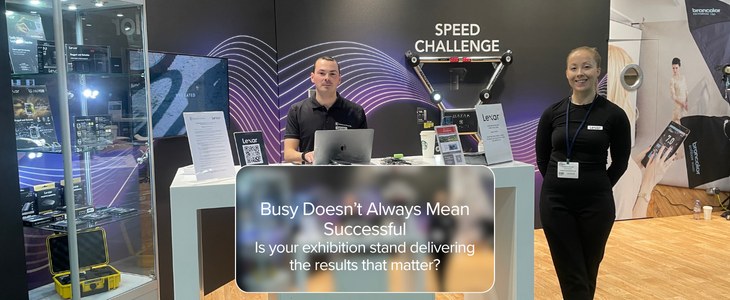
Is Your London Exhibition Stand Really Working?
How to Measure Whether Your London Exhibition Stand Is Really Working
A busy exhibition stand feels like success. Your team are talking to visitors, brochures are disappearing, demonstrations are attracting attention and there is barely time to stop for lunch. When the doors close, everyone leaves tired but pleased because the stand seemed busy throughout the day.
The more difficult question comes afterwards. What did all that activity actually achieve?
For businesses investing in exhibitions at venues such as ExCeL London and Olympia London, footfall is certainly encouraging, but it does not automatically translate into commercial success. Stand space, design, travel, marketing, equipment and staffing all represent a considerable investment, so understanding what you actually gained from the event matters.
The difference often comes down to knowing what success should look like before the exhibition begins.
A Busy London Exhibition Stand Is Only the Starting Point
There is nothing wrong with wanting a busy stand. Activity attracts attention and gives your business an opportunity to speak to more people, but visitor numbers alone tell you very little about the quality of those interactions.
Imagine two exhibitors finish an event having spoken to 500 and 150 visitors respectively. On the surface, the first appears to have performed considerably better. If the second exhibitor identified 60 genuine prospects and booked 20 follow-up meetings, while the first collected hundreds of names with little understanding of who they were, the picture changes completely.
This is why exhibitors need to decide what they are trying to achieve before arriving in London. For one business, success may mean qualified sales leads. Another may be launching a product and want demonstrations or trials, while an established company may be attending primarily to meet existing customers and strengthen relationships.
Once that objective is clear, it becomes much easier to judge whether the stand is genuinely working.
Exhibition Lead Generation Is About Quality, Not Just Numbers
Lead generation is one of the most common reasons businesses attend exhibitions, but collecting contact details is not the same as generating useful leads.
A badge scan tells you somebody visited your stand. It does not necessarily tell your sales team why they stopped, what they were interested in, whether they have purchasing authority or when they might be ready to buy.
This is where the conversations taking place on the stand become important. Experienced lead generation staff can establish enough information during an initial conversation to help distinguish general interest from a genuine commercial opportunity. That does not require visitors to undergo an interrogation. A few natural questions about their business, requirements or current challenges can give your follow-up team valuable context.
When those leads arrive with useful information attached, the sales conversation after the exhibition can begin in a very different place.
Are Your Sales Staff Spending Their Time Where It Matters?
Another useful measure of exhibition performance is how your team actually spent their day.
Your experienced sales staff may be some of the most valuable people attending the exhibition, particularly when an important prospect wants to discuss technical requirements, pricing or future projects. However, exhibition stands generate plenty of work that does not require senior sales experience.
Visitors need welcoming, literature needs managing, appointments need directing and straightforward enquiries need answering. If your sales director spends much of the day performing those tasks, they may be busy without necessarily being productive.
This is where professional London exhibition staff can complement an internal team. Exhibition staff can welcome visitors, begin conversations and identify who needs further attention, while hospitality staff can support meetings and look after guests. Your own sales team are then available when a conversation reaches the point where their expertise genuinely adds value.
The aim is not simply to have more people on the stand. It is to make better use of the people already there.
Measure What Happens After the London Exhibition
Some of the most useful exhibition results cannot be measured when the event closes.
A prospect who appeared enthusiastic at 3pm on the final afternoon has little commercial value if nobody follows up afterwards. Equally, a short conversation with the right buyer could eventually become considerably more valuable than dozens of longer conversations with visitors who were never likely to purchase.
A meaningful exhibition review should therefore look beyond footfall and consider what happened next. How many useful conversations were recorded? How many qualified leads were generated? Were follow-up meetings booked? Did prospects respond afterwards, and did any eventually become customers?
It is also worth reviewing the visitor experience itself. Were there times when people were left waiting because the team was busy? Did staff understand who the priority visitors were? Were useful details recorded consistently? These observations can help improve the next exhibition just as much as the final sales figures.
A Simple Exhibition Success Check
After your next London exhibition, sit down with the team and compare the results against the reason you attended in the first place. Look at the number of meaningful conversations, qualified opportunities, demonstrations or appointments rather than simply counting everyone who visited the stand.
Then ask one final question: what would we do differently next time?
Perhaps you need more exhibition staff during peak periods, better lead qualification, a clearer briefing or a different balance between hospitality staff and sales staff. Sometimes relatively small changes to the way a stand operates can make the next exhibition considerably more productive.
Busy Is Good, but Results Are Better
A lively stand at a London exhibition is a positive sign, but it should never be the only measure of success. The real value comes from what that activity creates: useful conversations, stronger relationships, qualified leads and opportunities that continue after the exhibition has finished.
Before your next event, decide what success actually means for your business and make sure everyone working on the stand understands it. When your exhibition staff, lead generation staff and sales team are all working towards the same objective, measuring whether the exhibition was worthwhile becomes much easier.
Because ultimately, the question is not simply how many people stopped at your stand.
It is whether the right ones did.

Related Posts